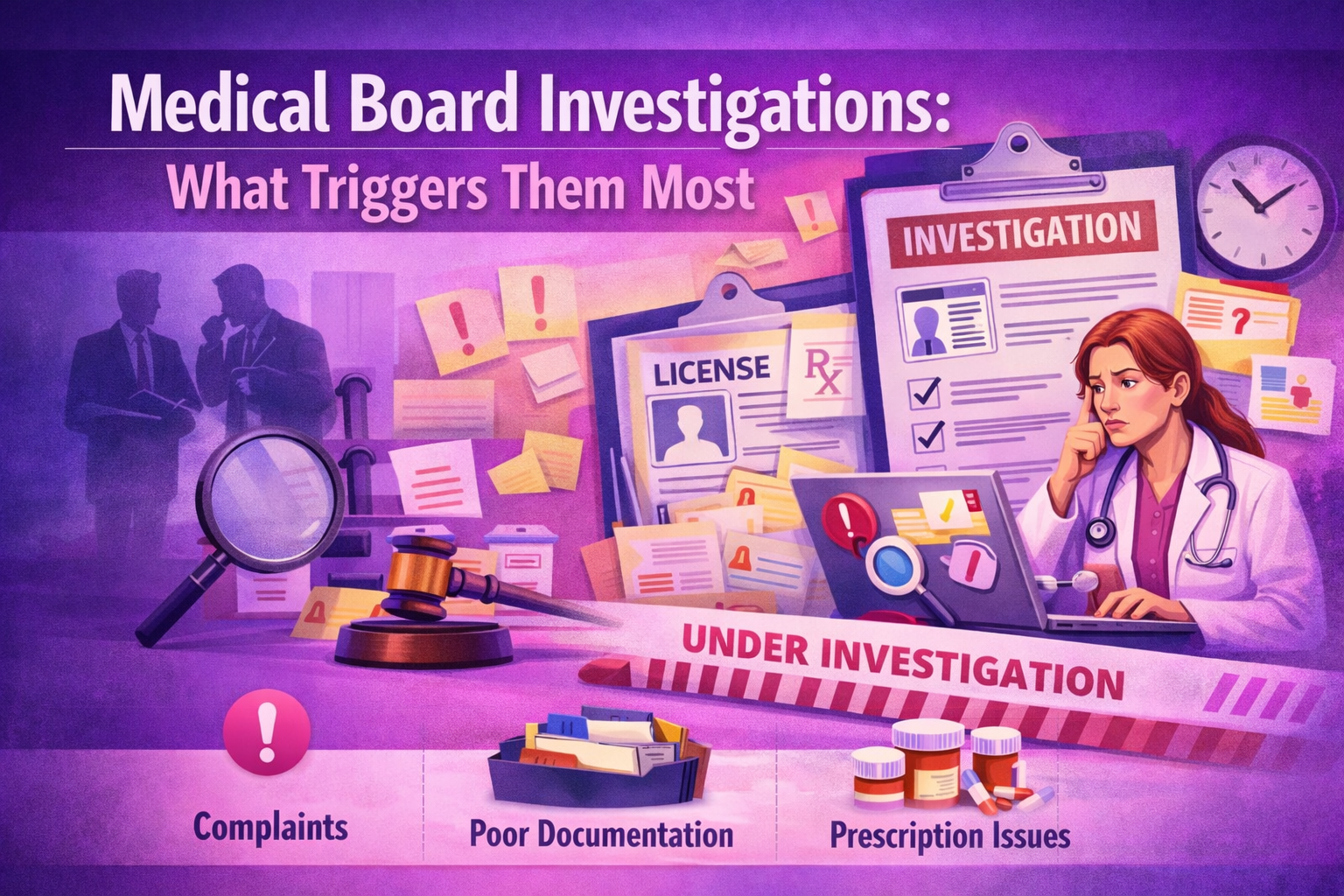

Medical board investigations rarely begin with a dramatic event.
More often, they start quietly—through a complaint, a report, or a routine review that uncovers something a board wants explained. By the time a clinic realizes an investigation is underway, the issue has usually been developing for months or even years.
For healthcare clinics, the risk isn’t just the investigation itself. It’s how unprepared organizations often are for the scrutiny that follows.
Who Needs to Be Paying Close Attention to This
If you own or operate a healthcare clinic that employs licensed providers, medical board oversight already applies to you.
This includes primary care clinics, specialty practices, outpatient facilities, and multi-provider organizations. It also applies regardless of whether the clinic has ever received a complaint before.
Board investigations are not limited to “bad actors.” They often involve clinics that believed their systems were compliant—until something triggered a closer look.
What This Means for Clinic Owners
Medical boards exist to protect the public. Their authority includes investigating complaints, reviewing provider conduct, and imposing discipline when laws or standards are violated.
From a clinic perspective, investigations often focus on:
- How care is delivered
- Who controls clinical decision-making
- Whether providers are practicing within legal authority
- Whether supervision and delegation are properly structured
Understanding how medical boards investigate complaints is critical, because boards evaluate patterns and systems—not just isolated mistakes.
The Most Common Triggers for Medical Board Investigations
While every case is different, certain issues appear repeatedly across states.
1. Patient Complaints
Patient complaints are the most common trigger. They don’t need to be legally valid to prompt an investigation—only credible enough to warrant review.
2️. Scope of Practice Violations
Providers practicing beyond their legal authority is a frequent cause of scrutiny. Clinics often discover exposure tied to how scope of practice issues create exposure, especially in team-based care models.
3️. Delegation & Supervision Failures
Improper delegation—especially involving non-physician providers—raises immediate red flags. These issues align closely with delegation and supervision failures that raise red flags during board review.
4️. Prescribing & Documentation Issues
Controlled substances, inconsistent documentation, and prescribing patterns outside norms commonly trigger investigations.
5️. Reports From Other Agencies
Payers, employers, colleagues, or other regulators may refer matters to medical boards, sometimes without the clinic’s knowledge.
Why Clinics Are Often Caught Off Guard
Many clinics assume investigations are triggered only by serious misconduct.
In reality, boards frequently investigate:
- Structural issues
- Policy gaps
- Oversight failures
- Inconsistent authority models
These issues often overlap with corporate practice of medicine risks clinics overlook. particularly where ownership, control, or management structures are unclear.
Investigations are less about intent—and more about compliance.
What Boards Look for Once an Investigation Starts
Once an investigation is open, boards typically examine:
- Licensure and credentialing
- Scope of practice alignment
- Supervision agreements
- Delegation policies
- Documentation consistency
This is where clinics that lack clear governance face the most exposure. Boards are empowered to assess not only individual providers, but the systems that allowed the issue to occur.
Understanding the state medical board authority and enforcement role helps explain why clinics—not just providers—often feel the impact.
Why Investigations Become Organizational Risks
Even when a single provider is named, investigations frequently expand.
Boards may request:
- Clinic policies
- Contracts
- Supervision documentation
- Ownership or management details
This is why clinics that invest in designing compliant clinic structures are better positioned to respond calmly and credibly when questions arise.
How Clinics Can Reduce Investigation Risk
Clinics that reduce regulatory exposure tend to:
- Align provider roles with state law
- Document supervision and delegation clearly
- Review scope and authority regularly
- Address issues proactively rather than reactively
Compliance isn’t about eliminating risk entirely. It’s about ensuring that when scrutiny occurs, the clinic’s structure supports its decisions.
How Court Approved Council Helps Clinics Prepare

Medical board investigations are easier to manage when clinics aren’t seeing their structure for the first time under pressure.
Court Approved Council works with healthcare clinics to identify compliance gaps early, clarify authority and oversight, and strengthen governance before questions arise.
The goal isn’t to respond better to investigations—it’s to reduce the likelihood they occur in the first place.
Clinics that understand how boards think are better equipped to operate confidently and defensibly.
The Real Takeaway
Medical board investigations are rarely random. They follow patterns—and those patterns often trace back to structure, delegation, and oversight.
Clinics that understand what triggers investigations can address issues early. Clinics that don’t often learn under scrutiny.
Understanding these risks now helps clinics grow with confidence—not correction.


+ show Comments
- Hide Comments
add a comment